
Moving a grand bayside home: the stairs, the piano, the art and the bay-edge access
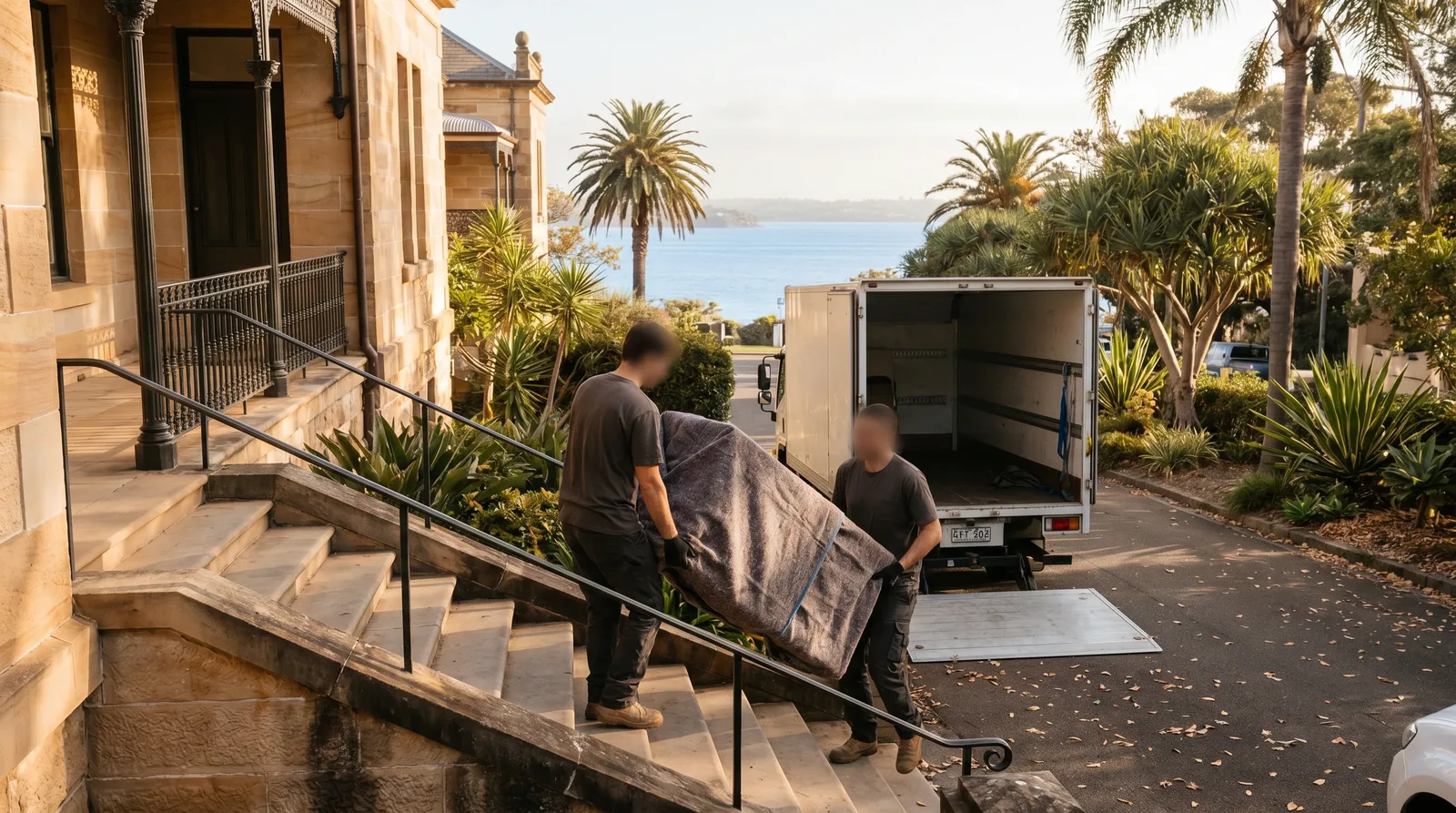
If you have ever moved a grand home on Melbourne’s bayside, you already know the move is not really about the distance. From Elwood down to Beaumaris these are some of the loveliest homes in the city, large period mansions, mid-century architect houses and gracious deco apartments, and the thing that decides your move day is what those homes are made of and where they sit. The staircase, the precious pieces inside, and the bay-edge access are the real work. Plan those three before the truck arrives and the day is calm. Leave them to chance and a beautiful home turns into a long, anxious move.
The staircase is half the job
The grand bayside home is rarely a single level. A Brighton period mansion can spread over three or four floors with a sweeping internal staircase, a Beaumaris architect house steps down a split level toward the view, and an Elwood deco apartment sits two or three flights up with no lift. Every one of those means carrying beds, lounges, wardrobes and white goods up or down stairs, often with a turn at each landing.
That is not a problem when it is planned. It becomes a problem when a small crew turns up expecting a kerbside lift and finds four levels and a piano. The fix is to size the crew to the home, not the address. A grand multi-level move needs enough hands to keep flowing, so it finishes in the day rather than stretching into the evening with a tired crew on a tight staircase.
The piano, the antiques and the large art
This is the part that makes a bayside move different. These homes hold precious things: the grand piano in the Brighton drawing room, the inherited antiques, the large framed artwork that cannot be tilted, the marble-top table, the fine china. Each one needs the right handling, padding, crating, the right number of people and a planned path out of the room.
A grand piano is the classic example. It is heavy, awkward and valuable, and on a staircase it needs the proper gear and a crew who have done it before, not four people and good intentions. Large artwork travels flat and protected, never leaned against the side of a truck. Antiques get wrapped and crated so a knock on a doorframe does not become a chip on a heirloom. Tell your removalist what you have before move day, room by room if you can, so the job is resourced for the pieces rather than surprised by them.
Architect homes need their fittings protected too
On the Beaumaris and Black Rock architect coast, the home itself is part of what you are protecting. Mid-century modernist houses are full of designed-in joinery, full-height glazing and built-in furniture, and the finishes are original and hard to replace. A good move here protects the house as carefully as the contents: padding the door edges, covering the floors, and planning the carry so nothing swings into a pane of glass or a timber wall. It is slower and more careful by design, and that is the point.
The bay-edge access
The best bayside streets sit hard against Port Phillip Bay, and that shapes the access. In Brighton, Hampton and Sandringham the prized streets run down to Beach Road and the foreshore, where the coast traffic and the council parking schemes mean the load has to be timed and parked legally on the residential side. In Black Rock and Beaumaris the clifftop blocks sit above or below the road, so the carry is a real descent or climb from where the truck can stop. In Elwood the beachside streets are narrow and the deco walk-ups have no lift.
None of this is exotic once it is planned. Where can the truck legally stop? How far, and how steep, is the carry to the door? Is there a staircase, a clifftop descent, or a permit worth lodging, as in the City of Port Phillip for an Elwood move? With those answered, the truck size and the crew are matched to the job, and a smaller shuttle vehicle can be used on the tightest streets.
Plan all three, then book
So the bayside checklist is short: the stairs, the precious pieces, and the access. Work out how the home is laid out and how many levels the crew is carrying, list the piano, the antiques and the art that need careful handling, and sort the loading spot and any permit at both ends. Do that and the price reflects the real work, the crew is sized for the home, and a grand bayside move is a calm one.
If you would rather just talk it through, get a no-obligation quote and tell us your suburb, your home and the pieces that need real care. We will plan the move around the real bayside, not a generic distance.
Common questions
Can a removalist move a grand piano and antiques from a bayside home?
Yes. A grand piano, antique furniture and large artwork are a normal part of a bayside move, especially in Brighton, Sandringham and Beaumaris. Tell us the pieces and where they sit in the home and we will bring the padding, the crating and the crew to move them safely down the staircase and out, without a mark on the piece or the house.
Do I need a parking permit to move on the bayside?
It depends on the council. The City of Port Phillip, which covers Elwood, runs a temporary parking permit you can use for a move, valid for up to three days, applied for online at least five days ahead. The City of Bayside and the City of Kingston do not publish a dedicated removalist permit, so there we park legally, scout a sensible loading spot and time the truck. On most bayside streets the staircase and the carry matter more than the parking bay anyway.
Why does a grand or clifftop home cost more to move than a flat suburb home?
Because the work is in the stairs, the handling and the access. A multi-level period home with a sweeping staircase, a clifftop block with a long descent to the door, or a no-lift deco walk-up all take more hands and more time than a flat kerbside carry, and a piano or fine art needs careful crating on top. We price the real access and handling so there are no surprises on the day.
Planning a move?
Get a free, no-obligation quote and we'll plan the access at both ends with you.
Get a quote